


In this post I explore how platforms die according to Cory Doctorow’s theory of ‘enshittification’ adding in my own thoughts, some case studies and other interesting links.
Enshittification
During 2023 the word ‘enshittification’ caught my attention but I was too busy to reflect upon it and dig into it. It was such a busy year and I was focusing on achieving non-negotiable outcomes so staying away from distractions like ‘thought leadership’ and Linkedin where you can unintentionally come across certain new business jargon getting too much attention thanks to posts and likes and algorithms. But as we move into 2024 I have now caught up and know, for example, that it was the ‘2023 Word of the Year’ via The American Dialect Society – that bought the word some attention.
I was thinking about it most recently as a I had just bought a new Samsung phone. It was 2017 when I bought my Galaxy Note 8 and it had a good run. What I did not realize was that although it was functioning ok the underlaying hardware and OS software has undergone a transformation in the last 7 years with features the Note 8 simply could not use. What this meant was with my new Android A15 I spent days installing my apps, setting up accounts and security and dealing with all the prompts on new features I could use and things I could now connect. Even though the phone is fine and easy to use (but not easier than the Note 8) this setup was a pain. I was at the pub with a work colleague, and I said its like the enshittification of my phone. We had a good chat about the enshittification of things and I thought I should catch up a bit more on the word.
Its a concept related to platform decay and that is a hot topic as everyone is watching how the various big platform wars play out. Its broad as a concept so can be considered at a ‘business model’ level but its especially applicable to the various technology-focused platforms (e.g. streaming, publishing, retail) where the role of the platform provider is to be a broker between content audiences and content creators.
Yep platform decay is a buzz. Its not the same thing but it did remind me of another buzz I enjoyed back in the day – back in the ‘00s’ – crazy times for IT nerds. It was back when ‘Service Orientated Architecture’ was ‘in’ and SOA was everywhere. For me the ascendancy of SOA seemed to parallel the first wave of enterprise architecture awareness – I was an EA at the time. SOA was technically going to move enterprises from systems to services and then redefine how platforms serviced thier markets via B2B, B2C etc. I was certainly drinking that ‘kool aid’ and spent a small fortune on the series of expensive hardcover SOA books by Thomas Erl – you see the more Thomas Erl books you had the better they looked on your bookshelf and were a physical manifestation that showed you were all over SOA. I thought his moment in the sun may have passed but I just checked and saw these days he is into ‘Cloud AI’ – well of course he is.

Its now 2024 and we don’t talk about ‘SOA’ as a concept anymore. It has passed through the Gartner hype cycle and reached the ‘Plateau of Productivity’ and reflecting this we now have more refined and specific technical discussions on whether to adopt cloud-enabled serverless architecture or microservices deployments.
Cory Doctrow is the creator of the word ‘enshittification’. I had not seen a photo of him but I have now and I love his not too serious Wikipedia photo and also his career profile: No degree, a Sci fi author, P2P Software entrepreneur, Digital Rights Management guru. Its a nice runway that leads to his wide-ranging insights on enshittification. He is also outspoken. In deciding to move from London back to LA he had this to say of London: “London is a city whose two priorities are being a playground for corrupt global elites who turn neighbourhoods into soulless collections of empty safe-deposit boxes in the sky, and encouraging the feckless criminality of the finance industry. These two facts are not unrelated.”. He is married to Alice Taylor who is smart and savvy. They have a daughter named Poesy Emmeline Fibonacci Nautilus Taylor Doctorow – I think that is much better than the name choices of Elon Musk and Grimes. I got a sense Cory’s thoughts on life and business are going to be interesting. You can start at his visually ‘plain style’ (powered by WordPress) blog. Its full of good stuff.
How does Enshittification cause the death of platforms?
Cory has been refining his thoughts on enshittification since he first shared the word early in 2023 so to keep it fresh here in this post I referenced his most recent views as shared in his Marshall McLuhan Lecture on 29 January 2024 in Berlin.
“So what’s enshittification and why did it catch fire? It’s my theory explaining how the internet was colonized by platforms, and why all those platforms are degrading so quickly and thoroughly, and why it matters – and what we can do about it.
It’s a three stage process: First, platforms are good to their users; then they abuse their users to make things better for their business customers; finally, they abuse those business customers to claw back all the value for themselves. Then, they die.
When a platform starts, it needs users, so it makes itself valuable to users”.
Its a nice simple sequence. The first stage should now be familiar to us - its abut user adoption and locking in loyalty. Some platforms have been very successful at this – Amazon AWS and Microsoft Azure come to mind, admittedly they are technology platforms first and foremost. More interesting is Amazon retail in its earlier days or Amazon Prime – for both businesses it was all about building a critical mass of customers. They are now somewhere between stage two and stage three in their journey towards enshittification. It feels like there is a certain inevitability about this.
After I read a bit more I wanted to try and visualize it so I could plt platforms on their journey as I thought that might be a neat slide. You know the Death of Platforms as an inevitable timeline. Surprisingly given the Linkedin buzz I did not find any good diagrams where someone had attempted this visual. So here we go. My diagram looks like this…

Key Elements:
- The three stages are shown at the bottom.
- Stage one we all know – attract customers and create loyalty.
- Two waves of initial attraction followed by frustration and abandonment.
- Two sets of stakeholders the platform is trying to manage – its users and its business partners.
- The end is inevitable – for some it may come sooner than for others.
There is much more going on this lifecycle than my simple diagram shows. You can watch yourself the Marshall McLuhan Lecture where Cory explores some seriously deep complex business, market and regulatory dynamics. The whole lecture is here (and below) Cory starts at 9:53 – he does a great job given he is wearing a mask.
In the lecture he uses Facebook as the exemplary example, but he has written a number of other case studies on the death of platforms. I have taken the Facebook example and dumbed it down a bit and blended in my own experience.
Facebook – how enshittification happens
We all know Facebook so we can understand it as a case study. Its long upwards linear growth of user adoption was initially driven by creating social engagement to get you onto the platform, and your friends onto the platform, and then get you engaging with people you do not even know (your new FB friends). Then keep you there by making it easy to share social content. Then repeat the formulae around the whole planet until you have 3 billion users. Along the way introducing all sorts of innovations like video features and an evolving messenger that has largely replaced SMS for P2P communication, and more and more content and advertising precision targeted using personal data and location services etc – and keep repeating, keep growing. This took years. Then with a critical mass of global captive eyeballs Cory explains what happened next:
“To the advertisers, FB said, ‘Remember when we told those rubes we wouldn’t spy on them? We lied. We spy on them from asshole to appetite. We will sell you access to that surveillance data in the form of fine-grained ad-targeting, and we will devote substantial engineering resources to thwarting ad-fraud. Your ads are dirt cheap to serve, and we’ll spare no expense to make sure that when you pay for an ad, a real human sees it.
To the publishers, FB said, ‘Remember when we told those rubes we would only show them the things they asked to see? We lied! Upload short excerpts from your website, append a link, and we will nonconsensually cram it into the eyeballs of users who never asked to see it. We are offering you a free traffic funnel that will drive millions of users to your website to monetize as you please, and those users will become stuck to you when they subscribe to your feed.’ And so advertisers and publishers became stuck to the platform, too, dependent on those users”.
I was pretty happy I felt I had trained FB to give me what I wanted. At this point everyone was kind of winning. The users were getting good content, the advertisers were getting good click-through and the publishers, following some big stad-offs had finally met FB in the middle. Afterall, they had direct engagement with a 3 billion user content audience who might be prepared to pay to get through paywalls with some encouragement and at worst were probably happy with the content provider based on the value of the free limited content they had access to via mechanisms such as ‘free article counts’. I am a terrible abuser of this constantly migrating amongst quality journals with new e-mail accounts simply to get free access – an endless try before you buy. But this status quo cannot last and the game has to change for everyone. It was now time for the third stage – back to Cory:
“It was time for withdrawing surplus from everyone and handing it to Facebook’s shareholders. For the users, that meant dialing down the share of content from accounts you followed to a homeopathic dose, and filling the resulting void with ads and pay-to-boost content from publishers.
For advertisers, that meant jacking up prices and drawing down anti-fraud enforcement, so advertisers paid much more for ads that were far less likely to be seen by a person”.
For publishers, this meant algorithmically suppressing the reach of their posts unless they included an ever-larger share of their articles in the excerpt, until anything less than fulltext was likely to be be disqualified from being sent to your subscribers, let alone included in algorithmic suggestion feeds”.
So around about ‘now’ Facebook has entered the most dangerous uncharted territory of enshittification:
“It wants to withdraw all available surplus, and leave just enough residual value in the service to keep end users stuck to each other, and business customers stuck to end users, without leaving anything extra on the table, so that every extractable penny is drawn out and returned to its shareholders”.
I know all my friends seem to be less active on Facebook and that it has become really boring. But I have not yet left. If users can’t leave because everyone else is staying, then when everyone starts to leave, there’s no reason not to go, too – death of the platform right? – Summary please Cory:
“That’s terminal enshittification, the phase when a platform becomes a pile of shit. This phase is usually accompanied by panic, which tech bros euphemistically call pivoting”.
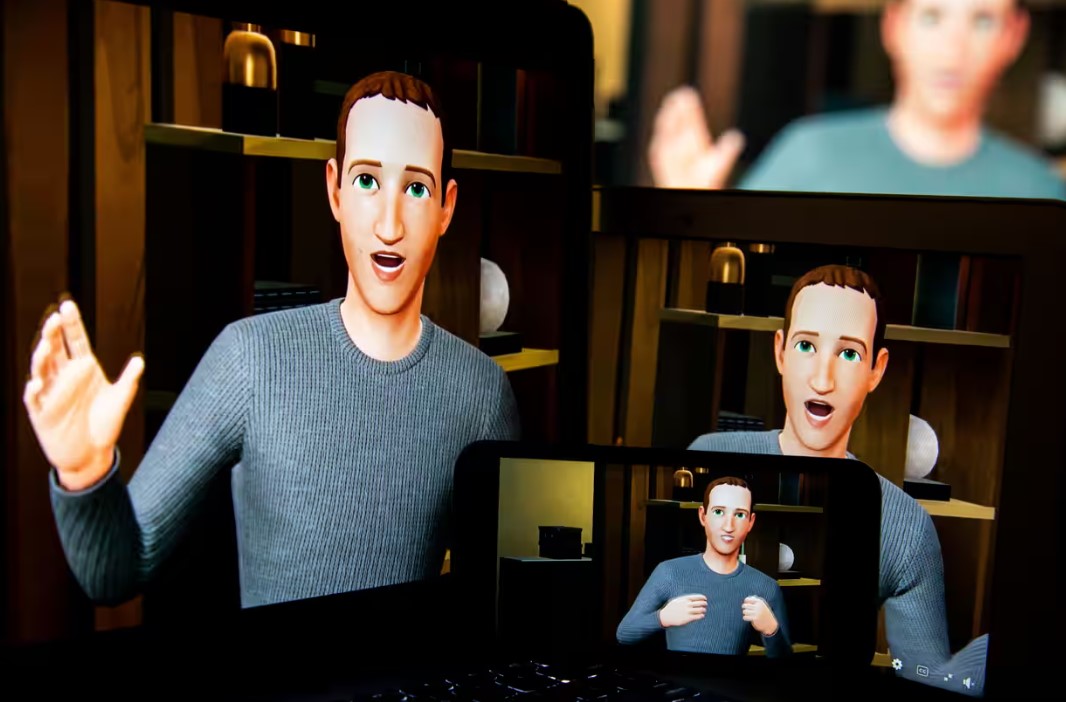
The rebranded ‘Meta’ and its virtual focus is a pivot. But seriously, Who even understands what its all about. This analysis of the evolution of Meta Business Strategy was an interesting read but I still do not think I understand where its going. Is ‘2nd Life’ still around? – Apparently yes if you read ’20 years on: Second Life, the fashion-forward metaverse that keeps on giving’.
Users are very aware of these platform changes and pivots over time and they can feel this progressive erosion of value (aka enshittification) and they talk to each other about it and say they have ‘cut back their social media’ because as Cory tells it:
“Facebook started to cram more ads into the feed, mixing payola from people you wanted to hear from with payola from strangers who wanted to commandeer your eyeballs. It gave those advertisers a great deal, charging a pittance to target their ads based on the dossiers of non-consensually harvested personal data they’d stolen from you”.
Some other examples I have been looking at.
Amazon Retail – Remember Disintermediation
Amazon was good for a while. But now searching Amazon doesn’t produce a list of the products that most closely match your search, it brings up a list of products whose sellers have paid the most to be at the top of that search. Those fees are built into the cost you pay for the product. Try searching for a new mobile phone.
‘Displacement is the new Disintermediation’ by Ian Heller, is an interesting but quite old 2017 article I just discovered when searching for platform case studies. Ian puts forward an idea that might and as it turns out without knowing it might actually be how Amazon Retail has prepared for the platform challenge by getting even bigger and becoming itself a mega supplier:
“Much of Amazon’s power is derived from its “third-party” marketplace, an offering available to both consumers and business customers. This breakthrough is the new enabling model for what is a superior value proposition to an increasing set of customers. Even the world’s largest retailers and distributors offer a tiny fraction of what Amazon “carries.”
Distributors and retailers who sell through Amazon’s third-party marketplace are enabling a ferocious new competitor and may be participating in their own demise”.
Google – Google owns search and that is dangerous
Google owns search. In 2024 it looks like this.

Increasingly the first results seen in a Google search may not be what the user has searched for. Google Ads provide prominent placement in the search results page. The emergence of AI generated content is making this even trickier for Google to manage but they need to as Trust in Google is becoming a thing. There is not too much to say here. If you have 90% of the market and no competition you can do what you like as the platform between an audience seeking content and Google business partners providing content and prepared to pay to be found. Its business. The Google/Apple relationship is interesting. In 2021 Google paid Apple $US26 billion to be retained as the default search engine on Apple devices. It cost Google only $US1 billion for this privilege in 2014. It was revealed in the recent US Justice Department antitrust trial that the figure was 36% of the total revenue generated by Google for Safari based searches. Even with this significant expense Google benefits as it makes money when users click on advertisements that pop up in its searches and shares the revenue with Apple and other companies that make Google their default search engine.
Music Streaming – Spotify and the others
Being a lifelong music head I have been watching the evolution of music streaming platforms for quite a while now, ever since I first used P2P services like Audiogalaxy and Napster to ‘share’ my music with people I did not know and never even met. It was weird watching a little icon when someone was accessing your files on your PC. Even weirder thinking about it in 2024 and its ‘security’.
In 2024 music streaming services are now well into their fight for survival. Back in 2022 – the most recently reported yearly global numbers, there were around 600 million total global subscribers across all music streaming services. With nearly 8 billion people on the planet that is not a big uptake. Music streaming services potential market growth remains an opportunity worth pursuing. Everyone thinks Spotify will win out. Possibly. In 2023 it was reported to have 226 million premium subscribers so only around a third of the current market leaving things pretty open still with billions of potential subscribers. At the moment Spotify has a huge lead in subscriptions and numbers count in this space. But Spotify has some very credible competitors so the race has not yet been won. Looking at the competitors I am thinking Soundcloud and Deezer probably will not make it. Apple is interesting to watch around the Google as default search engine agreement with Apple mentioned above, its interesting as right now Google does not have a music platform with Google Play Music dead since 2020. Spotify is now the music platform of choice for Apple device users. Amazon music has also been around quite a while now but has never really got traction but remains one to watch given its backed by Amazon – space race vs. music race?. Tidal will be my one to watch. It only has 5 million subscribers compared to Spotify with 600 million. But currently Tidal has 90 million tracks compared to Spotify with less at 82 million. Importantly here in this service space Tidal provides music with a higher streaming quality so at face value for its core use case of ‘listening’ its already a better product. It also has a music focus which defaults it to be a simpler product. Increasingly Spotify is ‘bloating’ out with all sorts of new features to retain market share and grow subscribers.
I would also as an aside mention Bandcamp here. Your kids may not have heard of Linkedin and don’t use Facebook and instead live on Tik Tok and Instragram – but ask them and they might say yes I use Bandcamp. It had an indie aesthetic from day one and was the new musicians Myspace and evolved as a place for music creators that was effectively an independent distribution platform with a global reach. A much-loved platform by both its users and its content creators. But things went bad for Bandcamp in 2023. The appropriately titled ‘Lawyers Guns Money’ blog explores the recent events and enshittification of Bandcamp here.
“Bandcamp is more than just a store. They see it as part of the culture, a crucial lifeline for scenes where love, not money, is the main driver (yet money is still kinda necessary to pay the bills). It’s notable that not only does Bandcamp sell vinyl, cassettes, and CDs; a big part of its business is digital downloads. Bandcamp customers love music so much that they’re willing to pay real money for a non-material format that the rest of the market long ago left for dead as it moved to a subscription model”.
Below in ‘The Agenda: Cory Doctorow: How Spotify Rigged the Music Market’ Cory Doctrow explains very clearly how Spotify rigged the music market in partnership with the big three music publishers.
Film and TV Streaming
In the world of film and TV streaming Amazon Prime seems a good example of a platform heading to enshittification. When I first subscribed a few years ago there was tons and tons of content – not all good but all free within my subscription. Two years later and there is a steadily decreasing amount of free content accessible through the monthly subscription and at the same time a steadily increasing range of partner content ‘silos’ accessible through the Amazon ‘portal’ (e.g. Mubi, Paramount etc) but each is an additional content service by a third-party provider with an additional cost. This is classic enshittification. The streaming service user gets access to more content but must pay for it (after an initial free trial to establish stickiness) and thanks to the Prime platform as broker the third-party content creator can have an arrangement with Prime to get direct access to a target streaming user community and directly position their offering. Its a captive qualified audience you do not have to pay to find or create – you just have to sell to them. This is targeted marketing 101. And me well I end up wondering what do I get for my monthly Prime subscription feeling sure its value to me is steadily diminishing. And in reality its only the third party ‘add on’ subscriptions that make me retain my subscription. Prime simply does the third-party procurement for me as I am too lazy – its identical to what is happening in Amazon retail with third parties. That that type of subscription is a fragile platform status because as Cory would say: “the difference between “I hate this service but I can’t bring myself to quit it,” and “Jesus Christ, why did I wait so long to quit? Get me the hell out of here!” is razor thin…”.
More Case Studies
There are also good case studies online on Tik Tok, Twitter and Crypto but they all have interesting additional elements that would just complicate this introductory overview, so I suggest look them up. TV and video streaming is a platform worth watching – too many providers, dilution of content quality, ideas being thrown at the wall to try and retain subscribers, alternative subscription models etc. With this new enshittiffication wisdom I am also up or a few retrospectives on some of those platforms that have already left us somewhere between stage two and stage three – RIP.
Summary

Some take-outs:
The concept of platforms dying as a result of ‘enshittification’ feels like it makes sense and may be inevitable for some platforms.
Cory Doctorow has come up with a great new word and has a great way of telling the story so it does not feel like a lot of theoretical mumbo jumbo.
Platforms that operate by bringing together a consumer audience and a partner ecosystem that pays and competes to access the consumers are susceptible.
The early risk point is when evolving platforms face innovative competitors and the later risk point is when the platforms simply become too big.
The concept of the death of platforms aligns nicely with the established Gartner Hype Cycle concept. With almost two decades of serious platform plays to now study it provides new insights on what happens in particular in the ‘Trough of Disillusionment’.
I am looking forward to the ‘2024 Gartner Enshittification Hype Cycle’.
We can all pick and follow our own ‘must watch’ platforms over the next few years.

 My Working Life
Leave a comment